I’ve read more than a few offensive passages in my time. Most recently I decided to abandon The Power by Naomi Alderman, in which she gives a masterclass of causing offense to Muslim women. It was her attempts to normalise the apartheid state of Israel which finally led me to drop it into my recycling bin, in the hope that it would be reincarnated into something, anything, better. There are authors who have caused me offence and I have decided to never read their works such as Salman Rushdie, and then there are others who use tropes, stereotypes and language I find frustrating, but if they released a book I was curious about I might pick it up from my local library, I certainly wouldn’t spend my own money, Elif Shafak comes to mind here.
What I would never do is censor books or insist on them being rewritten to suit my sensibilities. I’m a child of the 80’s, raised by first generation immigrant parents, and have seen the very ugly (yep I used that word!) faces of racism and xenophobia first hand. It continues to thrive in our culture through the white saviour narrative which forms the backbone of the majority of Hollywood films. I could walk into any newsagent today and see racist rhetoric on the pages of almost all our newspapers, or visit a school and see textbooks that continue to whitewash our history. So given all of this, its astonishing to me that books by the children’s author Roald Dahl are being changed to remove language that is deemed offensive (such as ugly, fat and female) and passages are being rewritten by sensitivity readers hired by the publishers and the Roald Dahl Story Company.
As a parent I have read many of the Roald Dahl books with my children, and I’ll confess I loved reading his books as a child myself. When we read The Twits we talked about the description of people, I encouraged my children to think about men with beards in their lives (their dad, uncles grandfathers), and how they might feel reading some of Dahls descriptions. We also talked about how he described beauty, which is often the opposite of our own brown skin, brown eyes and black hair. When we read the BFG, I felt I needed to tell them that the Queen of England and the British army were no allies to people in need. They loved the book so much that they also wanted to watch the film and we talked about the differences in the two, which gave me the opportunity to speak to them about time and context. In the books the giants are buried in a deep pit, whilst in the 2016 film they are left on an Island with only “snozzcumbers” to eat. These differences are important because they also speak about cultural context and for young readers, give them an opportunity to engage in critical thinking.
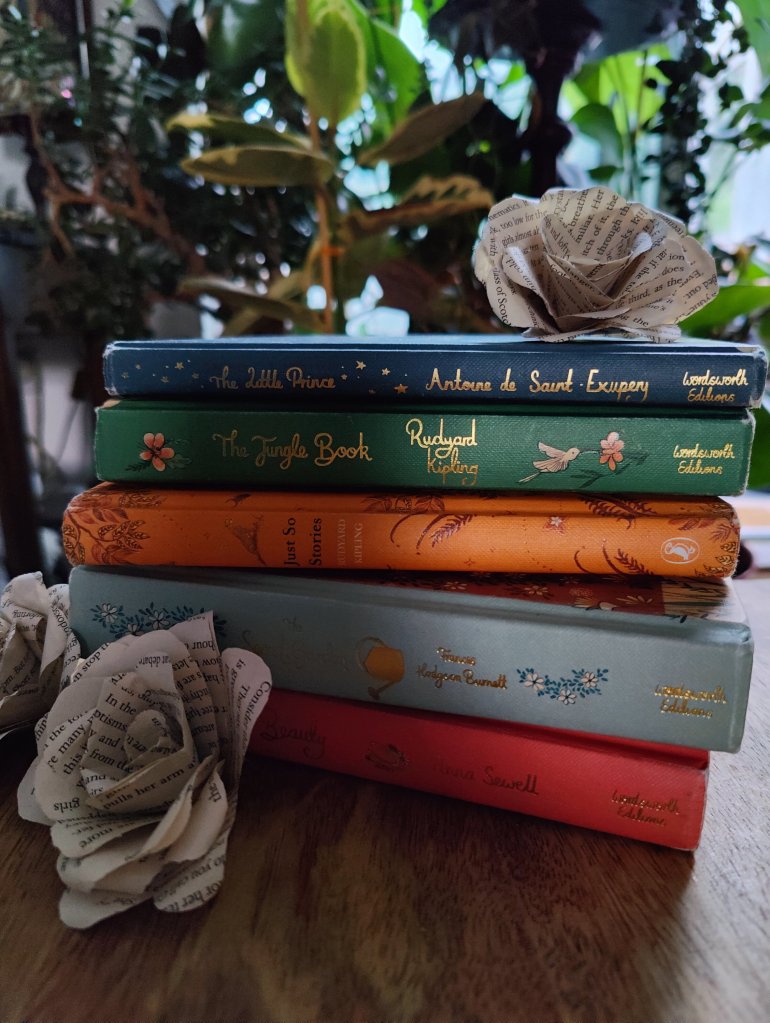
One of the best things about reading with children is the discussion that follows. I get to make a case for the things I find problematic and explain a little to them about the context in which the book was written. We occasionally even google the author and talk about their lives and political views. This was particularly pertinent when we read The Jungle book as I consider Kipling a racist Imperialist (The White Man’s Burden being one of his many racist poems) The Jungle Book was written in 1894 by a white British man who was born in India. And whilst I would never make excuses for racism, it is important to put things in context when we read and consider some of the ideas within his books. Not only does this allow us to learn about our history but it also allows us to critically analyse texts within the context and the time they were written. It provides us with a cultural lens to the past and erasing that doesn’t serve to eradicate racism, or make the world better. To me it feels as if it serves to only shut down uncomfortable, but important conversations and feed into the machine of capitalism.
As a parent I could choose to completely avoid books that are written by authors who held problematic views, but honestly I think this would result in my children missing out on a vast body of literature and the subsequent cultural references that derive from them. It would also deny them an opportunity to learn about history and the problematic nature of publishing for hundreds of years. Just this week I read Frankenstein, which has Islamophobic tropes. The Bell Jar by Sylvia Plath is basically all the ills of white feminism with racial slurs towards Chinese and Mexicans. Huckleberry Finn by Mark Twain uses the N word 200 times. The Secret Garden, by Frances Hodgson Burnett, has a conversation between Mary and Martha in which, the former tells the latter “blacks are not people.” Agatha Christie, Arthur Conan Doyle, and James Matthew Barrie are all guilty of using racial slurs in their books as are children’s classics such as Doctor Dolittle and The Little House on the Prairie Books and some of the Dr Seuss books. Rather than editing out passages, so these books can still sell, we need to have more diversity in publishing and we need to not idolise the authors of these books on our “must read” or “bestsellers” lists. Otherwise all we are doing is masking and not really dealing with the issues.
Mary Shelley wrote at a time where the tropes she uses in her books were widespread. When I read Frankenstein, whilst I was taken aback by the obvious racist, imperialist language, it also encouraged me to look into the history of the author and the time in which she wrote. Sanitising classics is much less of a concern to me than the existing issues in publishing and the idolising of historical figures who held genuinely problematic views, particularly those in power who also caused massive amounts of harm to black and brown bodies, harms that we continue to suffer today. Yes, I’m thinking Churchill. If these changes were about anything other than capitalism, we’d be having more conversations about redirecting funds into publishing and ensuring it was a truly diverse venture and not over 70% white, as it continues to be to this day.
I think this is a really interesting conversation, not because I think books should be rewritten or edited to suit todays sensibilities, but because of cultural eraser and who really benefits from it. We are currently struggling to teach critical theory in our classrooms, because any challenges to the status quo, or analysis of the intersection of power and knowledge leads to a huge backlash from predominantly white academics and those on the right of politics. Changing a few words in books so that they can continue to sell, while refusing to engage in conversations that are critical of this countries history and it’s direct link to continuing colonialism, global poverty and climate change is insulting. Its exactly the kind of distraction politics we have come to expect, but this also has potentially long-term consequences on our abilities to accurately recall or critically engage with what we read. And as a reader I won’t stand for that.
 This Hybrid Reads