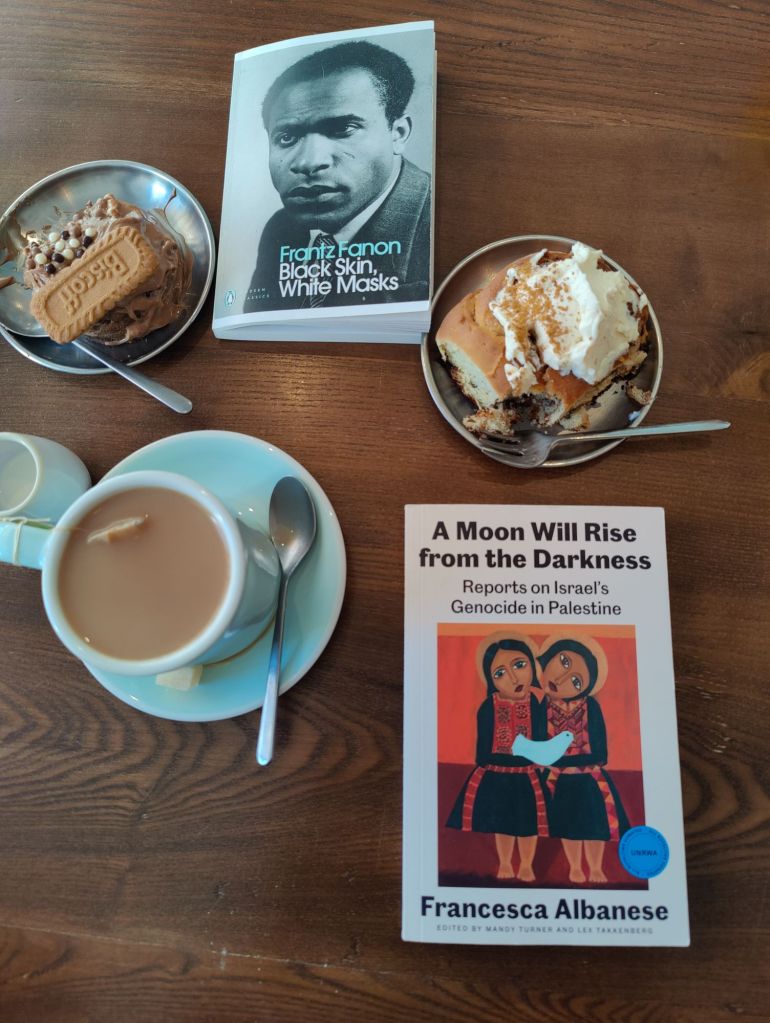
I started This Hybrid Reads because I rarely saw my own complex, multifaceted reality reflected in mainstream media. As a reader, I’ve always believed that literature should make us uncomfortable, challenge our structural biases, and force us to ask the hard questions about the world around us. Lately, I’ve been thinking heavily about the geography of storytelling, specifically the literature coming out of the Global South—or what we should more accurately call the Global Majority.
When we pick up a celebrated, internationally acclaimed novel set in the Global South, whose hands are we holding? Whose living rooms are we entering? Increasingly, the stories that achieve mainstream breakthrough in the Global North, filling the shelves of Western bookshops and earning spots on prestigious prize longlists, are told predominantly through the lens of the wealthy. This leaves us with two critical, uncomfortable questions: Are these elite narratives truly representative of the majority of those populations? And how much do these polished, upper-class perspectives distort and feed into our understanding of these places?
To answer the first question bluntly: No, they are not representative. Approximately 85% of the world’s population lives in the Global South. The vast majority of this global majority navigates structural inequalities, informal labour, economic survival, and localized ancestral traditions. They live in the fractures left behind by colonial extraction and modern capitalist expansion. Yet, when a story is filtered exclusively through the lens of the wealthy, we are looking at an insulated minority whose material reality is entirely mismatched with the world outside their doors. Characters in these elite narratives often navigate high society, cosmopolitan modernism, and Westernized private educations. Their primary anxieties might be existential or romantic, insulated from the foundational, daily struggles of the working-class or rural citizens surrounding them.
This insulation is protected by a deeply gatekept publishing pipeline. The authors from the Global South who successfully navigate the Western publishing industry often come from positions of immense systemic privilege. They possess the linguistic capital of English fluency and the institutional access that comes with holding Masters of Fine Arts (MFAs) or degrees from elite Western universities. Naturally, they write what they know, or what the market expects them to write. By relying on this wealthy elite to speak for an entire nation, literature inadvertently participates in an erasure, swapping out collective, messy, grassroots realities for an idealized, singular perspective.
This structural imbalance shapes our broader understanding by creating an illusion of symmetry. When Western audiences read about characters in Lagos, Tehran, or Mumbai who shop at high-end boutiques, speak flawless English, and share identical bourgeois values, it feels comfortable. It acts as a cultural bridge, offering a narrative of familiarity that whispers, “Look, they are just like us.” While humanizing, this dynamic is fundamentally conditional. It forces the Global South to perform a specific type of acceptability to be deemed worthy of empathy, suggesting that a population is only relatable if its upper class mirrors the lifestyle of the Global North.
Furthermore, this dynamic creates a dangerous illusion of symmetry rooted in elite proximity. By presenting a hyper-polished, bourgeois reality that mirrors the lifestyle and values of the Global North, these narratives perform a specific type of acceptability to earn Western empathy. In an earnest attempt to dismantle the colonial trope of the Global South as merely a playground of misery, they swing drastically to the other extreme, completely glossing over systemic hardships and erasing the urgent political and economic conditions that the true Global Majority must fight against daily.
As Chimamanda Ngozi Adichie powerfully argued, the danger of a single story is not that it is untrue, but that it is incomplete. If the only stories that gain international traction from a region focus exclusively on the wealthy intelligentsia, that specific class becomes the default universal norm in the minds of readers. The true danger is that this dynamic commodifies the Global South for a Western gaze. It turns complex geopolitical spaces into aesthetically pleasing backdrops for elite drama, rather than engaging with the gritty, radical, and beautiful realities of working-class resistance, labour movements, and indigenous sovereignty. If we only read about the Global South through the eyes of those who hold the keys to its capital, we are not deconstructing power structures, we are merely admiring them.
This structural gatekeeping becomes highly visible when looking at specific regional literary ecosystems. In Pakistan, for example, English-language creative writing and publishing is undeniably an elite enterprise, heavily gatekept by structural privilege. Because the local market for English fiction is relatively small and financially unviable on its own, the ability to produce this literature relies on an immense cushion of socio-economic and linguistic capital. Authors who successfully write and publish in English almost exclusively hail from the top one percent of the country’s wealth bracket, possessing backgrounds rooted in elite, transnational education systems from the global diaspora. This socioeconomic security grants them the luxury of time to write without relying on book sales for survival, alongside elite networks that bridge the gap to major international publishing houses. Consequently, English operates not just as a medium of artistic expression, but as a severe class barrier within the country’s literary ecosystem.
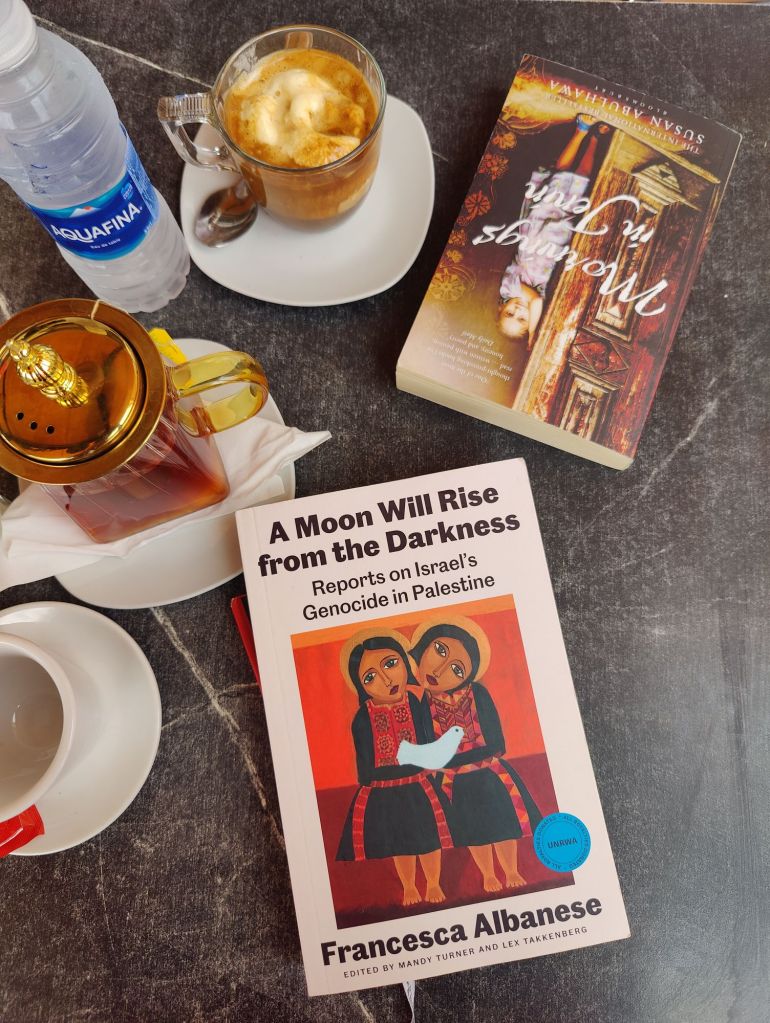
The physical reality of this class barrier hits hard when you step outside the pages of a book. Sitting in a bougie, European-style cafe in Rabat, Morocco, the cognitive dissonance is impossible to ignore. Inside, there is the curated comfort of artisanal coffee and ambient music; just outside the glass window, the crushing, inescapable realities of poverty line the streets. This exact friction follows me wherever I travel. I have felt it while navigating the fractured terrain of Kashmir and Pakistan, and while moving through Egypt, Türkiye, Saudi Arabia, and Dubai—the latter a glittering oasis that works exhaustively to sweep its massive, exploited migrant underclass completely out of frame. These travel experiences force an uncomfortable truth into the light: the physical spaces of the Global South are defined by structural inequality, yet the literary market that purports to represent these places works just as hard as Dubai to sanitize, aestheticize, or entirely misread the general population.
The core illusion of contemporary global literature is that when we read a book by a writer from the Global South, we are listening to the voice of the Global Majority. In truth, the vast majority of published writers from these regions belong to a microscopic, hyper-privileged minority of its people: the Western-educated, English-fluent elite. When this highly insular class acts as the sole translator of their respective countries for global consumption, the resulting literature is rarely reflective of the true, raw nature of those places. Instead, it becomes an exercise in class voyeurism or sanitized progressive drama, viewing the realities of the working class through a detached, privileged lens that fundamentally alters the landscape it claims to document.
This elitist distortion is vividly apparent when examining the contemporary Pakistani literary canon, which operates on a dual track of urban and rural elitism. Authors like Kamila Shamsie, Mira Sethi, and Sarvat Hasin are celebrated internationally for their sharp, evocative prose, but their work fundamentally represents a hyper-specific, metropolitan elite lens. Shamsie, an alumnus of elite institutions, writes gorgeous, sweeping narratives, but her characters often operate with a degree of transnational mobility and secular luxury completely alien to the average citizen navigating daily survival in Karachi. Similarly, Mira Sethi and Sarvat Hasin explore subcultures of liberal anxieties and elite family dramas that are heavily conditioned by the authors’ Oxford, Wellesley, and elite backgrounds. When global publishing treats these highly specific, upper-class dynamics as synonymous with “the Pakistani experience,” it performs a violent erasure.
A parallel, perhaps even more insidious form of this erasure occurs when elite male writers turn their gaze toward the rural working class. Daniyal Mueenuddin’s critically acclaimed short story collection, In Other Rooms, Other Wonders, was heralded by Western critics like The New York Times for its raw, unfiltered look at the lives of feudal servants, drivers, and labourers in rural Punjab. Yet, Mueenuddin, a Dartmouth and Yale Law graduate and the son of a high-ranking Pakistani civil servant, writes these stories from the literal position of the feudal landlord. While his prose is undeniably brilliant, it is still the lens of the master peering down into the servant’s quarters. The characters of the subaltern are meticulously observed, but they are observed through a paternalistic, landlord metric of utility and tragic flaw.
The global readers market eagerly consumes this as ‘authentic’ representation, treating the elite landlord as a sort of native ethnographer or anthropologist who can safely translate the subaltern. This dynamic turns the severe structural violence of the feudal system into an aesthetically pleasing literary commodity, satisfying a Western appetite for tragic Global South realism while ensuring the true rural poor remain entirely voiceless.
The stories from the global south, about the global majority, seem to be told by an ever-shrinking number of people. I’m not arguing that the stories that are being told are invalid; even if they are commissioned by the British Council or published by Penguin, they represent someone’s truth. What worries me is that our horizons are shrinking. To build genuine empathy we need to walk in someone else’s shoes, and sometimes those shoes will be profoundly uncomfortable, but we need to keep going.
If we want literature to be an act of reclamation rather than an exercise in elite self-preservation, we must actively look beyond the curated, mainstream spotlight. True diversification of our bookshelves requires us to bypass the gatekeepers of transnational capital and seek out the raw, unmediated voices of the world. To truly decentralize the Western-educated elite, here is how we must intentionally shift our reading habits:
Prioritize Works in Translation: Actively seek out literature that was originally written in local and regional languages (like Urdu, Arabic, or Wolof) rather than texts written directly in English for a Western audience.
Support Radical, Independent Publishers: Buy from small, independent presses that champion grassroots storytelling and refuse to treat the Global Majority as a monolith (e.g., Tilted Axis Press, Fitzcarraldo Editions, Saqi Books, or local presses native to the Global South).
Centre Oral and Working-Class Traditions: Look for anthologies, oral histories, and memoirs that document labour movements, localized resistance, and indigenous sovereignty directly from the perspective of the participants.
Interrogate the Author’s Lens: As you read, continuously ask: Whose hands am I holding? Investigate whether an author’s background grants them proximity to the power structures they claim to critique, ensuring you are consuming a community’s reality rather than class voyeurism.

