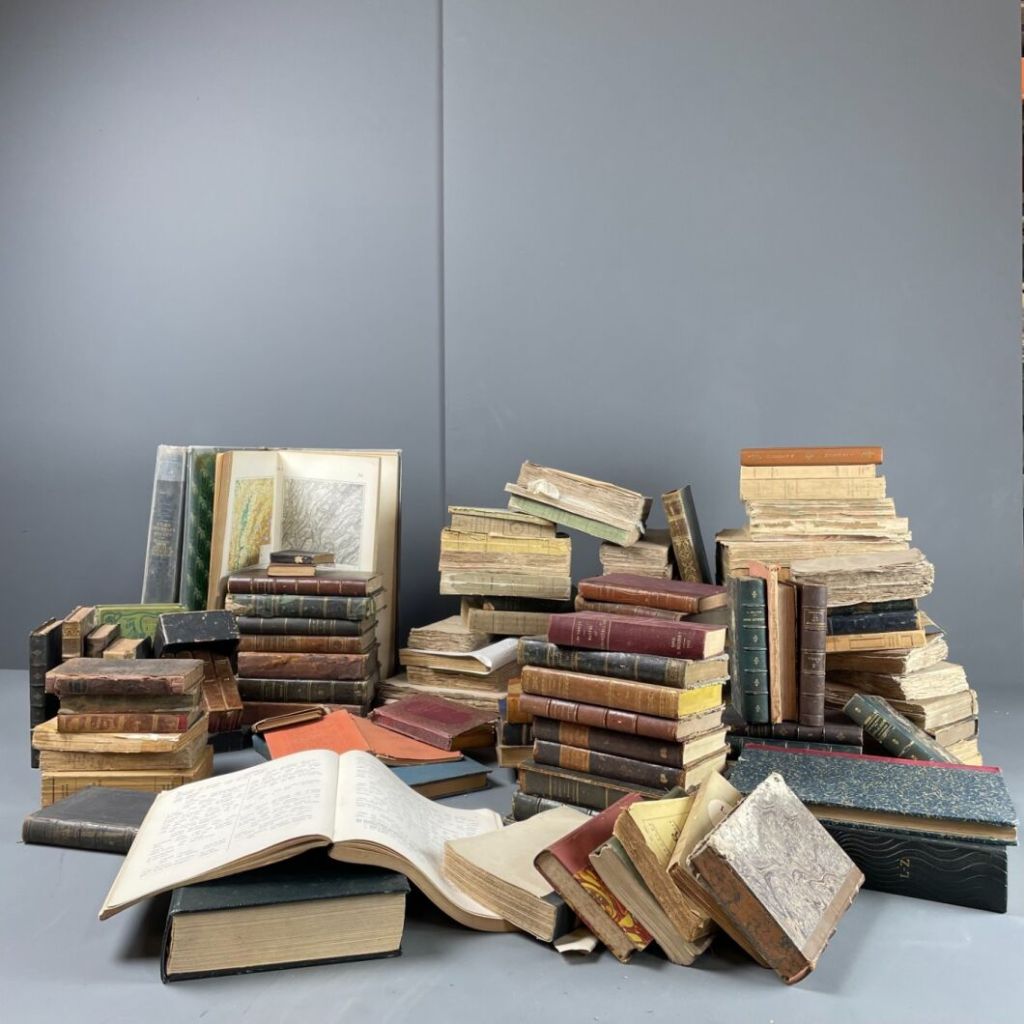
When news broke about Anthropic’s unsealed court documents—revealing a highly secretive operation codenamed “Project Panama”—the Western literary world collectively gasped. Here was a multi-billion-dollar artificial intelligence firm, the creators of Claude, systematically orchestrating the bulk acquisition of millions of physical, pre-AI print books. They weren’t building a magnificent library; they were using industrial hydraulic cutters to slice off the spines, feeding the loose pages into high-speed scanners, and then pulping, shredding, and discarding the physical remains.
The public outrage was swift and venomous. Commentators decried the operation as a modern-day “book burning.” Authors spoke of a deep, visceral violation—their lifetime intellectual labour treated as mere fuel, incinerated to power a commercial algorithm designed to replace them. Silicon Valley executives immediately scrambled into damage control, hiding behind proprietary databases like ISBNdb and issuing internal warnings. They knew exactly how the optics looked: Wealthy tech monolith destroys two million books to feed its digital machine.
But as I watched this wave of righteous fury sweep across Western literary circles, publishing houses, and mainstream media, a profound sense of irony settled in. The sheer panic, the violation of sovereignty, the anger at seeing human history sliced apart, stripped of context, and consolidated into a centralized vault for a powerful elite—where have we heard this before?
The global north is experiencing, for the very first time, the acute existential violation of having its history and culture stolen, processed, and locked away without consent. For centuries, the Global South has tried to articulate this exact trauma. The outrage at AI corporations extracting our literature to build a digital monopoly is fundamentally, beautifully, and terrifyingly identical to the outrage surrounding the cultural violence perpetrated by Western museums.
What Silicon Valley is doing to the written word is not “innovation.” It is simply data colonialism.
Whenever an empire—be it a nation-state or a tech conglomerate—embarks on a massive campaign of cultural extraction, its first line of defence is always the law. Empires do not like to be called thieves; they prefer to write the laws that make their thievery legal. In the case of Project Panama, Anthropic leaned heavily on the First-Sale Doctrine and the legal shield of Fair Use. Under US law, once you purchase a physical item, you have the right to sell, lend, or destroy your specific copy. A US district judge ruled that buying physical books and converting them one-for-one into internal digital copies for machine learning models is legally sound, categorizing it as “transformative use.”
This legal gymnastics mirrors the historical arguments used to justify the filling of institutions like the British Museum. The artifacts that sit in climate-controlled glass cases in London, Paris, and Berlin were rarely snatched in the dead of night by cartoonish bandits; they were seized under the auspices of colonial treaties signed under extreme duress, “deeds of gift” signed by puppet rulers, and imperial laws explicitly enacted to strip indigenous communities of their sovereign property.
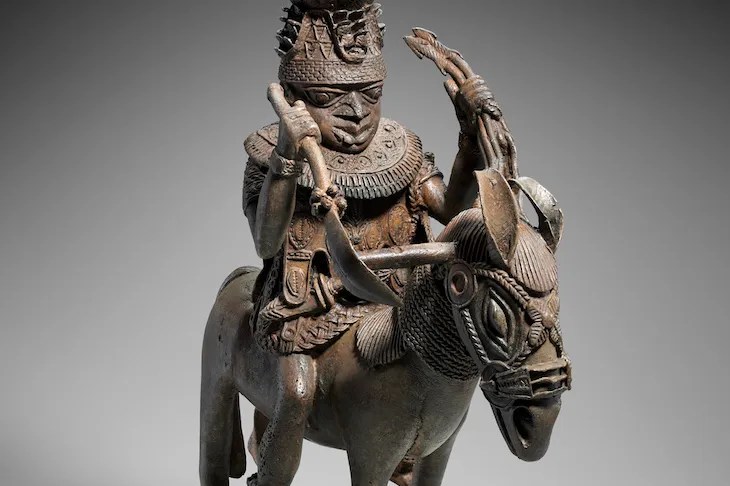
When the British Empire launched its punitive expedition against the Kingdom of Benin in 1897, looting thousands of royal brasses and ivories (now known as the Benin Bronzes), the plunder was framed as a legal exaction of war reparations. When Lord Elgin dismantled the friezes of the Parthenon, he pointed to a highly dubious Ottoman firman (permission decree) to legitimize the destruction of a living monument (although Turkish authorities insist an official Ottoman imperial firman has never been found) Both the colonial bureaucrat of the 19th century and the Silicon Valley lawyer of the 21st century rely on the same fundamental mechanism: a legal architecture built entirely by the powerful, for the powerful, specifically designed to legitimize the non-consensual extraction of human culture.
The Lie of the “Universalist” Custodian
The second striking parallel lies in the patronizing philosophical justification used by both museums and AI developers. They position themselves as the ultimate, universal guardians of human achievement—implying that the original creators cannot be trusted with their own heritage.
For generations, Western museums have deflected repatriation requests by deploying a deeply paternalistic narrative: “If we return these artifacts to their countries of origin, they won’t be properly preserved. They will be lost to war, neglect, or lack of proper facilities.” This mindset completely erases the sovereignty, wealth, and sophisticated infrastructure of nations like Nigeria, Greece, and Egypt, who have constructed world-class institutions—such as the Grand Egyptian Museum—specifically to house their returned history. The underlying premise is clear: cultural objects only achieve their “true” value when curated, categorized, and displayed by Western institutional experts. Maybe, if the West stop waging wars, culture and people in the global South would be safe(er).
Listen closely to the tech elite, and you will hear the exact same saviour complex. Anthropic hired a former Google Books executive to acquire “all the books in the world” because the digital internet has become polluted with AI-generated text. They needed the “pure,” human-edited print writing published before the AI boom to serve as high-quality training datasets. The AI companies argue that by scraping, scanning, and digesting millions of human books, they are building a “universal intelligence”—an Artificial General Intelligence (AGI) that will serve the greater good of humanity. The physical book, in its native state, is treated as inefficient and fragmented. It must be destroyed, digitized, and re-curated inside a proprietary server in California to achieve its highest, most optimized form. In both worldviews, the living, breathing context of the creator is an impediment to progress. The author’s relationship to their book, like an indigenous community’s relationship to their ancestral artifact, is dismissed as narrow, sentimental, or “nationalist.” The imperial archive demands total centralization.
Extraction of Value and the Refusal to Repatriate
The ultimate manifestation of colonial violence is not just the act of taking; it is the permanent extraction of economic and cultural value.
Colonial empires extracted raw materials—gold, rubber, sugar, and cultural artifacts—from colonies to enrich imperial capitals, leaving the source communities structurally impoverished. The artifacts displayed in Western museums generate billions in tourism revenue, prestige, and academic capital for the Global North, while the descendants of those who created them are routinely denied visas to even enter the countries where their heritage is held captive. AI training is the hyper-modern evolution of this exact extractive economy. AI companies treat the entire sum of human language and creative output as a “free raw material” to be harvested. They pay a few dollars for a used, physical book, run it through a hydraulic slicer, extract its semantic data, and use it to build software valued at hundreds of billions of dollars. This software is then sold back to the public, directly competing with, undercutting, and automating the very class of human authors whose work built the machine in the first place. And what happens when the victims of this extraction demand their culture back? When sovereign nations demand the repatriation of their looted history, Western museums engage in a endless dance of bureaucratic stonewalling, offering “long-term loans” of stolen property or demanding impossible standards of provenance documentation. When authors sue AI firms demanding that their copyrighted works be removed from the training models, tech companies claim that it is “technically impossible” to untrain a neural network—that once data is ingested, it cannot be unlearned. Both institutions operate on a policy of absolute permanence. Once your culture enters our archive, it belongs to us forever. There is no digital repatriation. There is no algorithm for un-learning theft.
A Decolonial Lens on the Digital Frontier
The horror that Western authors are feeling right now as they watch Project Panama unfold is a necessary, albeit painful, moment of historical reckoning. For the first time, the creative class of the Global North is realizing what it feels like to have an occupying force march into your intellectual territory, declare your life’s work to be “free raw material,” slice it to pieces, and tell you that it is being done for the “advancement of civilization.” We must recognize that the fight against unregulated, predatory AI models is not merely a niche legal battle over copyright infringement or digital licensing. It is a deeply political, inherently decolonial struggle. It is a continuation of the exact same resistance that indigenous and colonized communities have been waging for centuries against the institutional forces that seek to commodify, centralize, and erase human history.
If we are to oppose the corporate automated future being built by Silicon Valley, our outrage cannot be selective. We cannot weep for the shredded pages of a physical book in a California scanning facility while turning a blind eye to the stolen ancestral souls locked inside the glass display cases of London and Paris. Both are monuments to extraction. Both are symptoms of a world where power believes it has a natural, inherent right to consume everything in its path.
True decolonization requires us to look at the digital frontier with the same critical skepticism we apply to our colonial past. Until we dismantle the foundational lie that human culture is a free resource waiting to be conquered and enclosed by the powerful, the thieves—whether wearing pith helmets or Silicon Valley hoodies—will always keep spinning the wheel.
From Content Extraction to State Violence: The Imperial Ledger
But if we truly want to understand the terrifying velocity of this new digital imperialism, we cannot stop at the library door. The corporate elite wants us to view data scraping as an isolated issue of copyright and intellectual property—a polite, middle-class debate about royalties and creative credits. To do so is to miss the entire point of how empire operates. The engine that ingests our books to build profitable text models is the exact same engine that processes human bodies for state violence and geopolitical control. When we permit a handful of tech monoliths to treat human culture as a frictionless, borderless resource waiting to be conquered, we legitimize the very surveillance apparatuses weaponised against the most vulnerable. Look no further than how this logic manifests in the domestic and international spheres. In the UK, predictive policing algorithms—fed on vast, non-consensual sweeps of public data—actively target and over-police racialised, working-class communities under the guise of objective, mathematical foresight. The text is scraped, the pattern is extracted, and the subjugation is automated. But it is in occupied Palestine where the ultimate, dystopian endpoint of data colonialism reveals itself. In what has become a literal testing ground for hyper-militarised tech, AI-enhanced facial recognition and algorithmic tracking systems reduce Palestinian lives to digital test subjects. The data taken from people without their consent is not used to write software or generate text; it is used to restrict their movements, automate their checkpoint blockades, and systematise structural apartheid. The moral failure of the Western literary world lies in its selective empathy. We scream in horror when a hydraulic machine slices open a paperback book in California, yet we maintain a comfortable silence when the exact same digital logic strips away the bodily autonomy, safety, and history of human beings in Gaza and the West Bank. If you are outraged by the corporate theft of our stories, you must be equally outraged by the automated surveillance of our lives. They are not separate crises; they are two sides of the same imperial ledger
To resist this new digital enclosure, the creative class of the Global North must shed its selective amnesia and realize that their fight is part of a much older, global lineage of resistance. We cannot hypocritically demand the protection of our digital intellectual property while turning a blind eye to the stolen historical property sitting in our own national museums. In his seminal 1959 work, A Dying Colonialism, Frantz Fanon observed that true liberation occurs only when a people recognize the interconnected nature of their struggle against domination, writing that “Liberation does not come as a gift from anybody; it is seized by the masses with their own hands. And by seizing it they themselves are transformed…” Translated to the digital age, it is the corporate empire that reduces our collective human soul into mere “data sets,” but it is our shared resistance that restores our humanity. We must realize that the hydraulic book-slicer in California and the colonial gunboat in the Niger Delta are products of the exact same logic. Until we stand in absolute solidarity with the Global South’s demands for the repatriation of their stolen history, any outrage we feel over our shredded books is merely an exercise in privilege. True liberation on the digital frontier requires us to recognize that no culture is a free resource to be conquered, and that our struggles against the forces of extraction are irrevocably, beautifully bound together.

